Most of the noise people blame on a pressing is dirt. Before you decide a record is worn out, badly pressed, or graded wrong, clean it properly. A genuinely clean record from 1972 will usually beat a dusty reissue from last year, and the difference is audible in the first ten seconds.
This is the whole process, from the thirty second brush you should do before every play to the deep clean that rescues a dollar bin find. None of it requires expensive gear to start.
What You Actually Need
The short list for basic care is a carbon fiber brush and a stylus brush. That is it. Everything below that point is optional and none of it matters if you skip the brush.
For deep cleaning, add distilled water, a surfactant, and microfiber cloths. Distilled is not a preference, it is the requirement. Tap water carries dissolved minerals that dry inside the groove and leave deposits exactly where you were trying to remove them. A gallon costs about a dollar and cleans a lot of records.
Start Here
If you buy one thing today, buy a carbon fiber brush. Used before every side, it prevents most of the damage that deep cleaning later tries to undo. Our cleaning kit roundup covers the gear in detail.
The Dry Clean, Before Every Play
New dust sits on top of the groove. Playing a dusty record presses that debris into the vinyl with about two grams of force concentrated on a contact patch smaller than a grain of salt, which is how surface noise becomes permanent rather than temporary.
Put the record on the platter and start it spinning. Hold the carbon fiber brush lightly against the surface, letting the bristles sit in the groove without pressure, and give it two or three full rotations. Then slowly draw the brush toward the outer edge to lift the collected dust off the record rather than pushing it back down. Wipe the brush clean on your fingers.
Always work with the groove, in the direction of rotation. Wiping across the grooves drags grit sideways over the walls, which is the one motion most likely to leave a visible mark.
The Deep Clean
Wet cleaning is for records that are visibly dirty, newly bought used, or noisy in a way the brush does not fix. New records benefit too, because pressing plants leave release agent and paper dust from the sleeve on the surface.
Mix distilled water with a few drops of a surfactant. Photographic wetting agent such as Ilford Ilfotol is the traditional choice, and purpose made record cleaning fluids are formulated for the same job. The surfactant matters because plain water beads up and cannot reach into the groove.
Work in this order:
1. Keep the label dry. Water on a paper label leaves a permanent stain and can lift it. Use a label protector, or simply be careful and never flood the center.
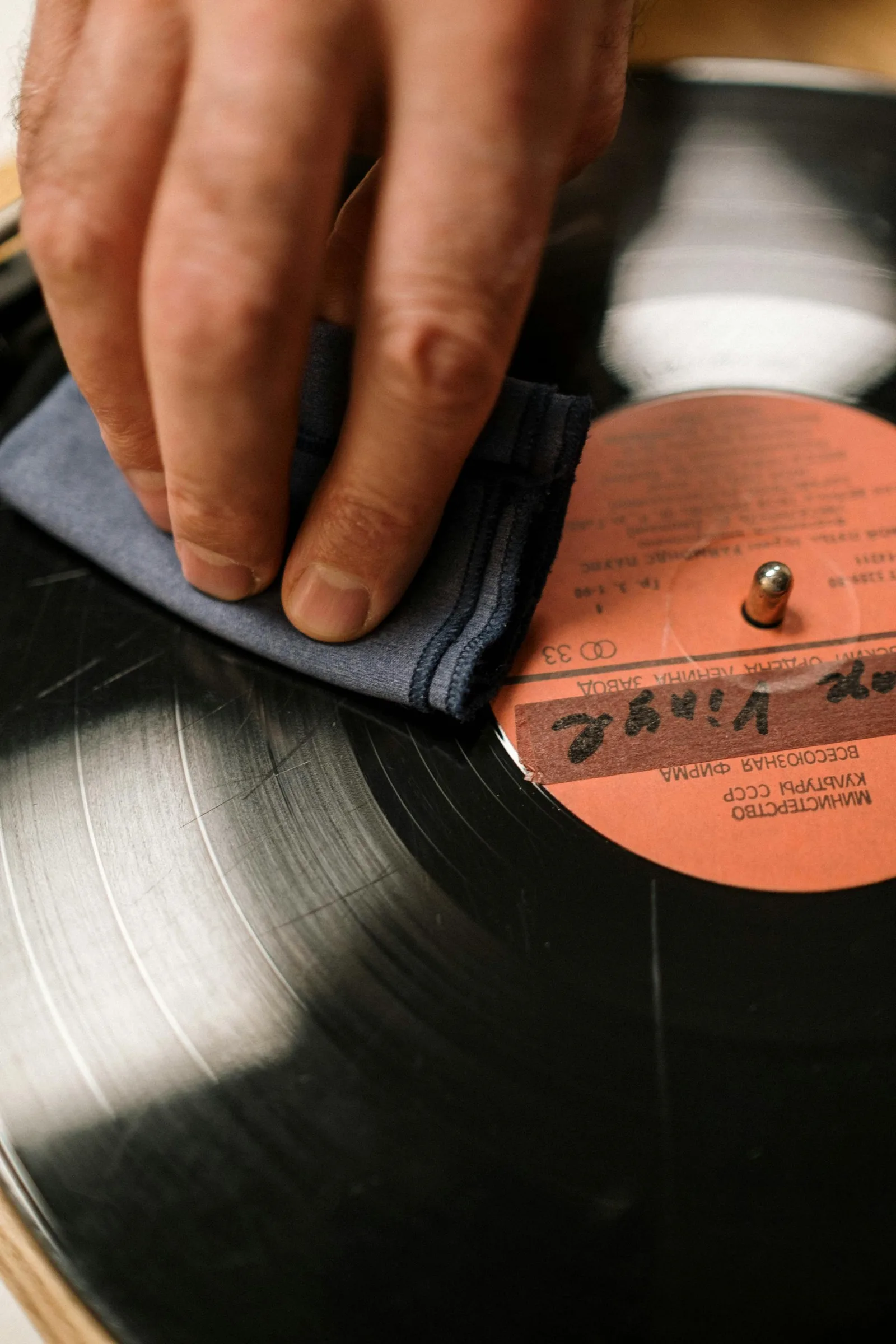
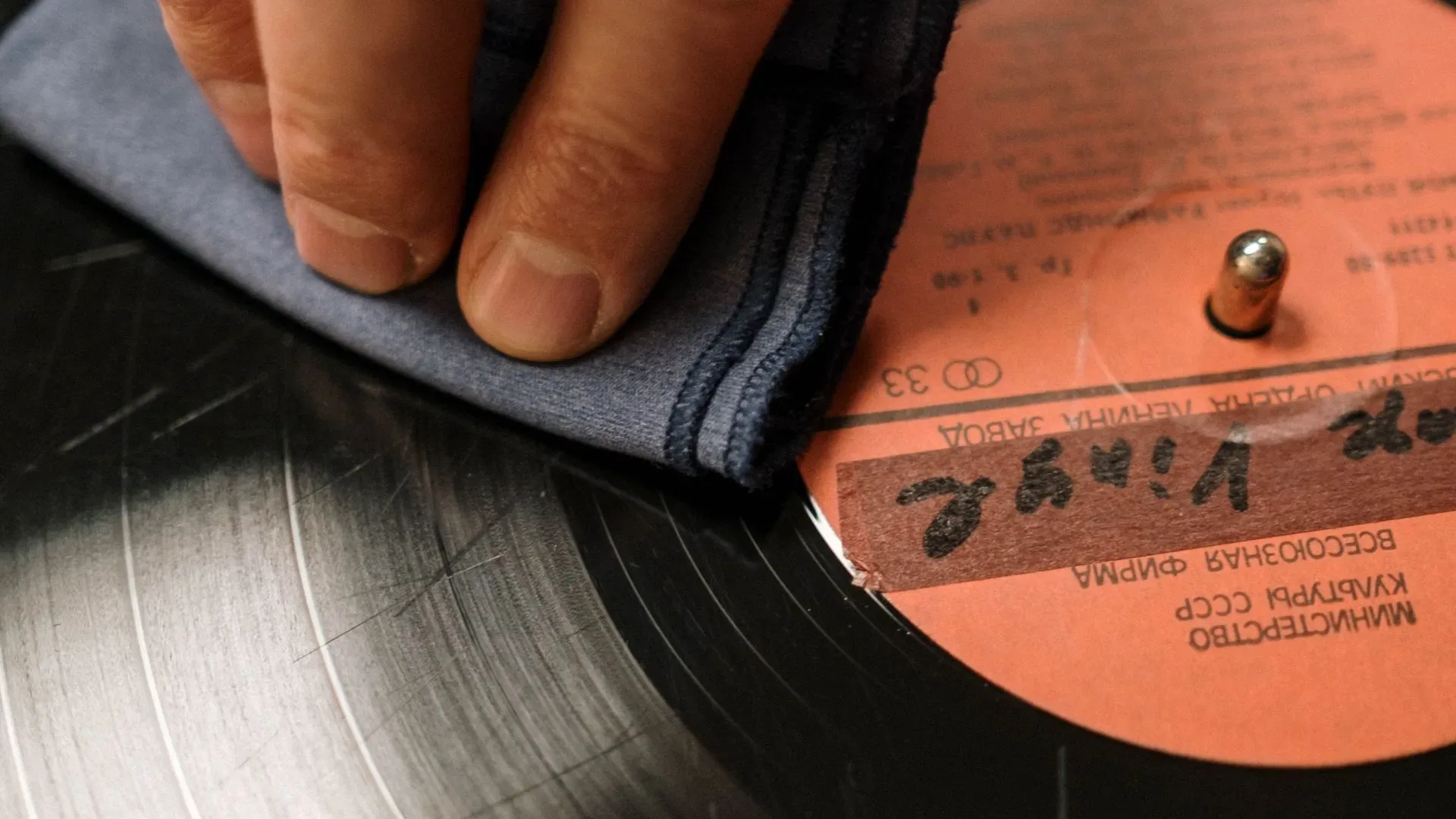
2. Apply and work the fluid. Wet the surface and move a microfiber pad in the direction of the groove, several rotations around the record. You are loosening debris, not scrubbing. Pressure does not help.
3. Rinse with clean distilled water. This step gets skipped constantly and it is the one that matters most. Surfactant left in the groove dries into a residue that attracts dust and can crackle. If you take away one thing from this section, rinse.
4. Dry completely. A clean microfiber cloth, again with the groove, then let the record finish air drying in a rack before it goes anywhere near a sleeve. Sleeving a damp record is how you grow mold in a collection.
What Never to Use
Tap water. Minerals dry in the groove. Distilled only.
Dish soap, hand soap, or anything with lotion, moisturizer, or fragrance. Those additives are designed to leave a film behind on skin, which is precisely the wrong behavior in a record groove.
Isopropyl alcohol on 78s, ever. Shellac dissolves. A 78 cleaned with alcohol can be destroyed in a single pass. Even on vinyl, alcohol is debated, and repeated high concentration use is widely believed to strip plasticizers over time. If you use it at all, keep it dilute and use it rarely.
Paper towels, tissues, and old t shirts. Wood fiber is abrasive at this scale and leaves lint. Microfiber only.
Anything circular and abrasive. No scouring pads, no melamine sponges.
When a Machine Is Worth It
Machines are a convenience purchase, not a magic one. Good hand cleaning gets most of the way there. Machines get you consistency and speed, which is what matters once you are cleaning dozens of records rather than one.
Manual bath systems such as the Spin Clean sit at the entry point. You pour in fluid, turn the record through a set of brushes by hand, and dry it yourself. Inexpensive and genuinely effective.
Vacuum machines from Pro-Ject, Okki Nokki, VPI, and others apply fluid and then suck it back off the surface. That vacuum step is the real advantage, because it removes the dirty fluid rather than spreading it around as it dries.
Ultrasonic machines such as the HumminGuru and the Degritter use cavitation in a fluid bath to lift debris out of the groove. They are the most effective option and the most expensive, and they are the only method that reliably cleans deep enough to change how a badly neglected record sounds.
The wood glue method circulates online and does work, but it involves spreading PVA glue across a record and peeling it off after it cures. It is slow, unforgiving of mistakes, and not something to try on anything you would be upset to lose.
After the Clean
Cleaning a record and returning it to a dirty paper sleeve wastes the work. Paper sleeves shed and scuff, and they are the most common cause of the light surface marks people assume are pressing flaws. Replace them with poly lined sleeves as a matter of course.
Clean the stylus too. A dirty needle deposits everything it has picked up onto the next clean record you play. Use a stylus brush back to front, never side to side, and never front to back.
Store everything vertically. See our full guides on storing vinyl long term and reading record grading, which is useful once you realize how many records graded Very Good are simply dirty rather than damaged.
The Used Bin Test
Before you write off a cheap record with light surface noise, clean it properly and play it again. A large share of dollar bin records are not worn, they are filthy. This is the single highest return habit in record collecting.
Where to Get Supplies
Your local shop sells brushes, sleeves, and fluid, and buying them there keeps the money in the store you want to still exist next year. Find one in the Record Store Directory.
Online, Turntable Lab and Sleeve City both carry the full range, and Acoustic Sounds stocks cleaning machines. Amazon carries most consumables and is often the cheapest place for distilled water, microfiber, and basic brushes: record cleaning supplies on Amazon.
Disclosure: Record Store Directory participates in the Amazon Associates program. If you buy through the Amazon link above we may earn a small commission at no extra cost to you. It does not change what we recommend, and we will always point you to a local shop first.
Get More Record Store Guides
New vinyl guides, store features, and industry news delivered to your inbox.
Features FAQ
Brush before every side. Rinse when you deep clean. Those two habits do most of the work.