Most people buy a record cleaning kit twice. The first time they buy whatever came up first, use it for a month, and discover it does not do the thing they actually needed. The second time they buy the right one.
This is how to skip the first purchase. The honest answer is that there is no best kit, there is only the right kit for how many records you clean and how dirty they are. Those two questions decide everything, so answer them before you look at a single price.
Pick Your Tier First
You clean a few records a month. You need a carbon fiber brush, a bottle of fluid, and a microfiber cloth. Total spend is under thirty dollars and it covers ninety percent of real world use. Do not buy a machine.
You just bought a collection, or you buy used constantly. You need a bath system. This is the tier where a machine starts paying for itself, because hand cleaning fifty records is a weekend and a bath system is an afternoon.
You clean constantly, or you own a cartridge worth more than your phone. Vacuum or ultrasonic. At this tier you are protecting a stylus and chasing the last of the noise floor.
The Honest Test
If you cannot say roughly how many records you cleaned last month, you are in tier one. Buy the brush and the fluid. You can always upgrade, and the brush stays useful forever regardless of what you buy later.
Tier One: Brush and Fluid
A carbon fiber brush lifts dust off the surface before it gets pressed into the groove by the stylus. Used before every side, it prevents most of the damage that deep cleaning later tries to undo. This is the single highest return purchase in record care and it costs about twenty dollars.
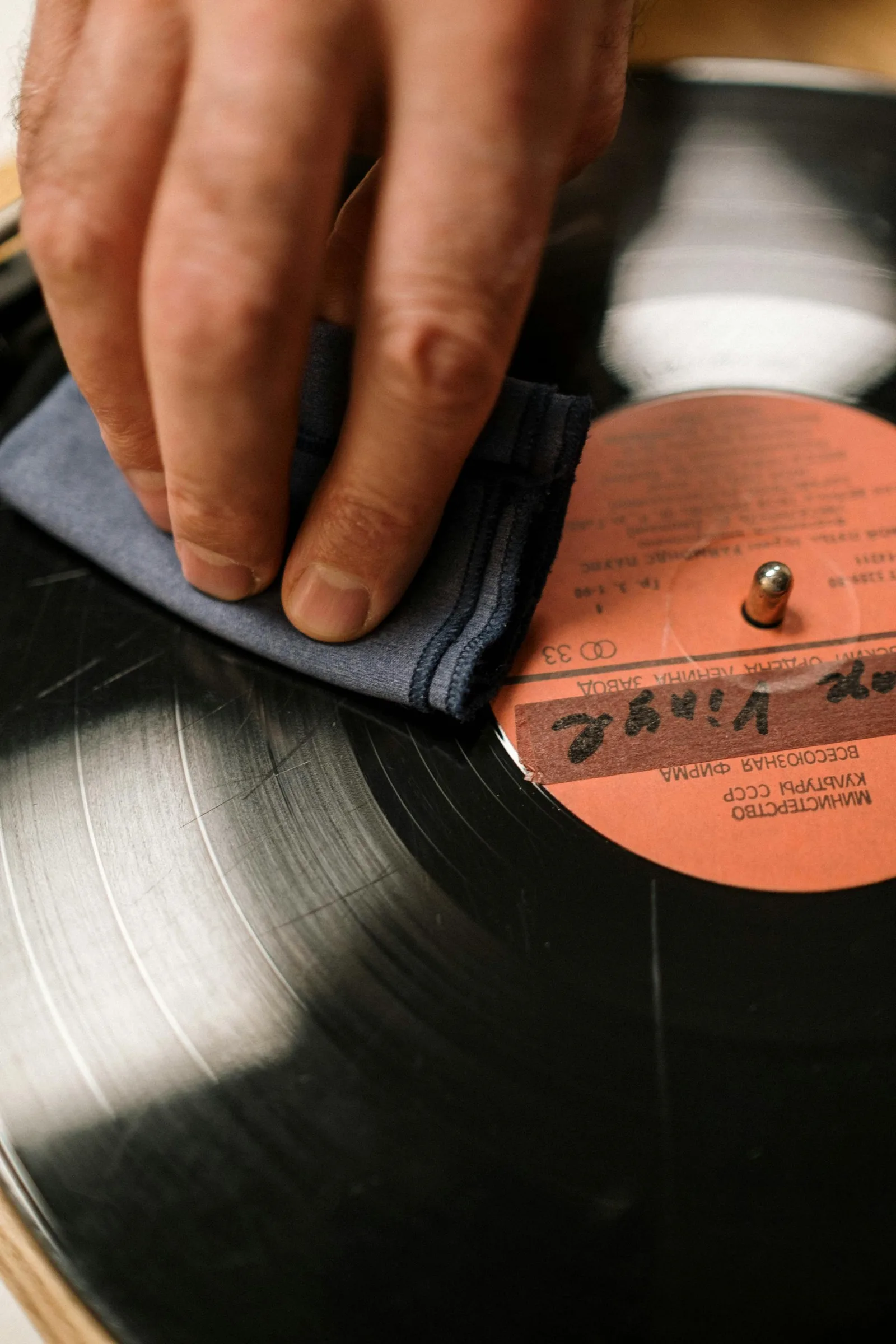
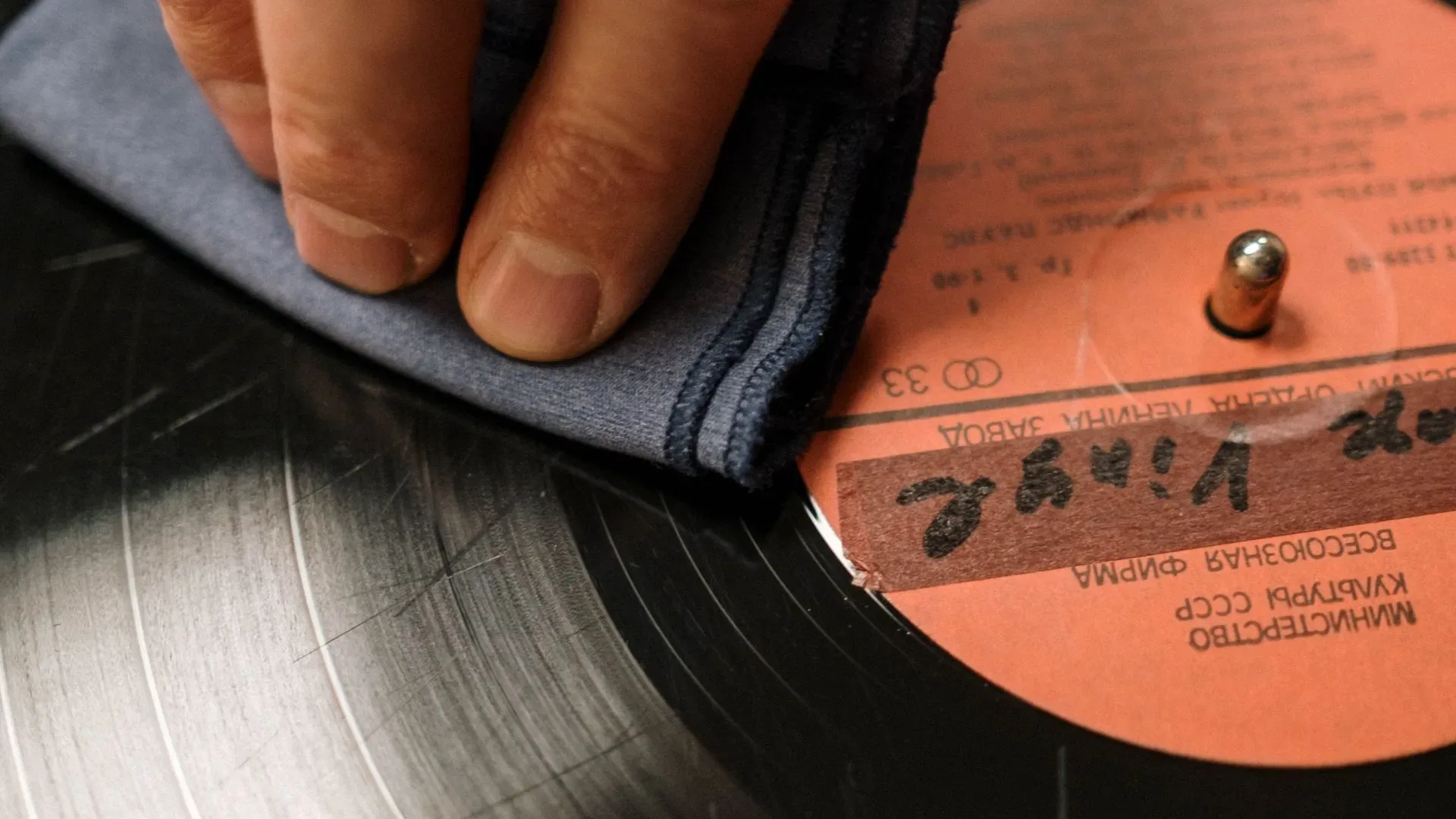
Add a bottle of proper record cleaning fluid and a couple of microfiber cloths and you have a complete kit for light duty. Skip anything sold as a kit that includes a velvet pad and nothing else, and skip anything that does not tell you what the fluid contains.
What matters in fluid: distilled water base and a surfactant so it can reach into the groove. What disqualifies it: anything with lotion, fragrance, or added polish. Those leave a film behind by design, which is the opposite of the job.
Tier Two: Manual Bath Systems
The Spin Clean Record Washer is the reference point in this tier and has been for years. You fill a reservoir with fluid, sit the record in it between two brushes, and turn it by hand for a few rotations. Then you dry it yourself with the supplied cloths.
It is genuinely effective, it needs no power, and it is the cheapest thing that will meaningfully improve a stack of thrift store records. The trade off is that you dry every record by hand, which is the slow part, and the bath water gets dirty and has to be changed.
Buy this tier if you bought a collection, if you shop used bins seriously, or if you have a shelf of records you have never properly cleaned.
Tier Three: Vacuum Machines
Vacuum machines apply fluid and then suck it back off the surface. Pro-Ject, Okki Nokki, VPI, and Record Doctor all make versions of this.
The vacuum step is the actual advantage and it is worth understanding why. On a bath system, the dirt is lifted off the record and then some of it settles back as the record dries. A vacuum removes the dirty fluid entirely before it can dry anywhere. That difference is audible on genuinely filthy records and inaudible on clean ones.
They are loud. Every one of them. This is not a defect, it is a shop vacuum motor doing its job, and it is worth knowing before it arrives in an apartment.
Tier Four: Ultrasonic
Ultrasonic machines suspend the record in a fluid bath and use cavitation, microscopic bubbles collapsing, to lift debris out of the groove. The HumminGuru sits at the accessible end and the Degritter at the top.
This is the only method that reliably cleans deep enough to change how a badly neglected record sounds, because it reaches into the bottom of the groove where a brush physically cannot go. It is also the most expensive tier by a wide margin.
The case for it is not one record, it is a large collection you intend to keep for decades, or a cartridge expensive enough that playing dirty records is a real cost.
What to Skip
Velvet pad kits that come with no fluid. The pad drags dust across the grooves rather than lifting it.
Anything advertising a secret formula without listing what is in it.
Cheap ultrasonic jewelry cleaners repurposed for records. The frequency and power are wrong for vinyl, the record is not rotated properly, and the label gets soaked.
Wood glue kits. The method works, but it is slow, unforgiving, and not something to buy as a product.
Where to Buy
Your local shop sells brushes, fluid, and sleeves, and the money stays in the store you want open next year. Find one in the Record Store Directory.
Online, Acoustic Sounds carries the machines, and Turntable Lab and Sleeve City cover brushes, fluids, and sleeves. Amazon is usually cheapest for consumables like distilled water and microfiber, and it carries most of the machines: record cleaning kits on Amazon.
Disclosure: Record Store Directory participates in the Amazon Associates program. If you buy through the Amazon link above we may earn a small commission at no extra cost to you. It does not change what we recommend, and we point you to a local shop first. We have not independently tested these machines, and this guide describes how the categories differ rather than claiming hands on comparison.
Once you have the kit, our full guide on how to clean vinyl records covers the technique, and the kit roundup goes deeper on individual models.
Get More Record Store Guides
New vinyl guides, store features, and industry news delivered to your inbox.
Features FAQ
Buy the brush today. Decide about the machine after you know how much you clean.